Spotting Communication Fallacies in Everyday Life
1. Attacking the Messenger & Confusing Correlation with Causation
Article: 8 Critical Thinking Fallacies You’re Likely Falling For on Social Media
Social media is a breeding ground for faulty reasoning, and this article covers two big ones:
- Undermining the Messenger: writing off an argument just because of who said it.
- Correlation ≠ Causation: assuming that because that two things happen together, one must cause the other.
From a Toulmin perceptive:
- In the first case, the warrant is irrelevant, attacking the person instead of the actual idea.
- In the second, the link between the claim and the evidence is missing entirely. Just because things ha[[en at the same time doesn't mean one caused the other.

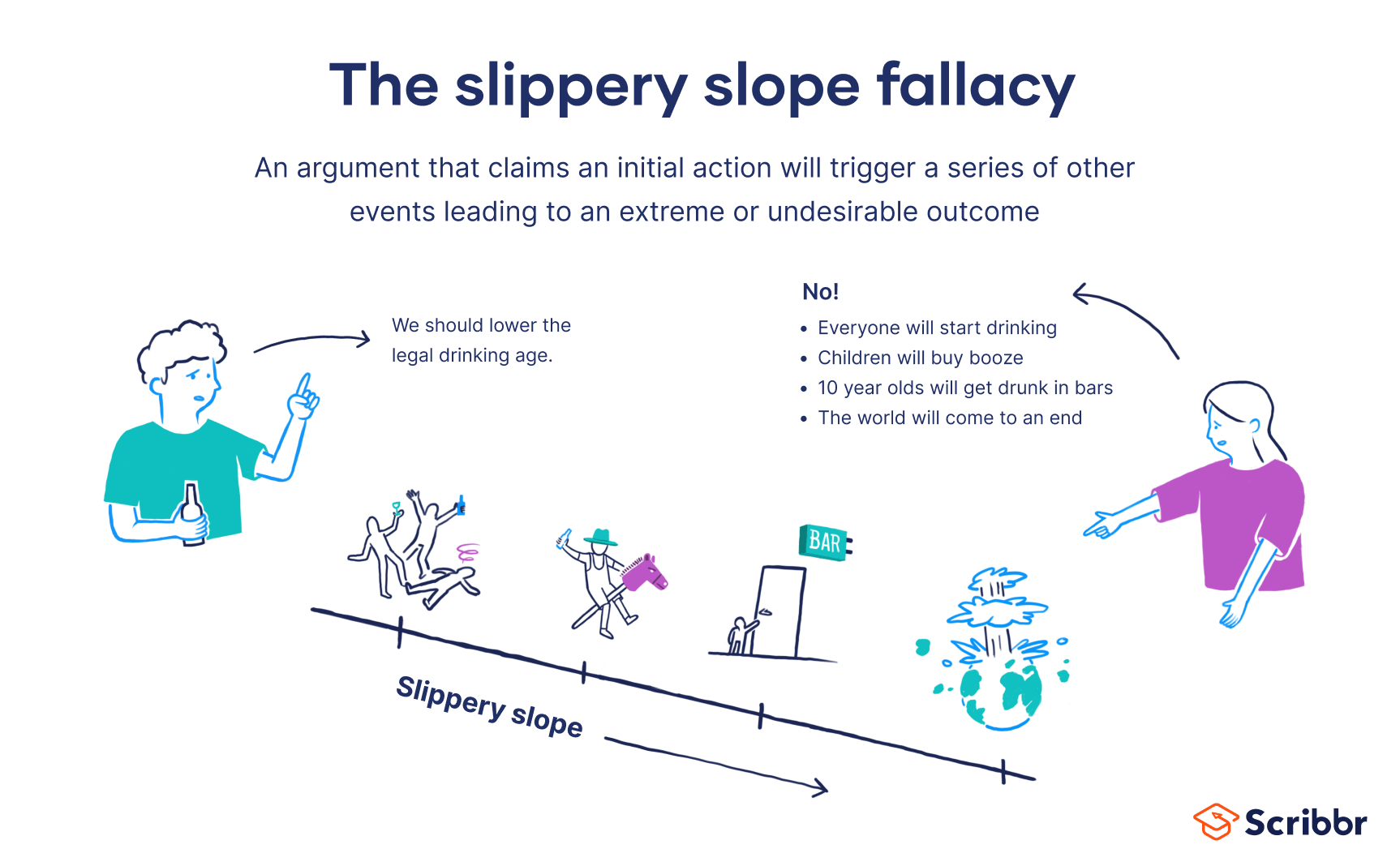
2. The Slippery Slope
Article: How to Spot and Avoid the Slippery Slope Fallacy in Everyday Conversations
The Slipper sloe fallacy takes a small step and blows it up into a worst-case scenario without solid proof that the extreme outcome will happen. This kind of argument can sound convincing because it plays on fear, but it skips over the actual evidence needed to make the leap.
In Toulmin terms, the warrant here stretches too far. There's no really backing to connect the small event to the huge consequence its just assumed.
3. Appeals to Emotion & the Genetic Fallacy
Article: 12 Fallacies to Avoid in Communication
This piece lists several communication pitfalls, but a few stand out:
- Appeal to Force ( Ad Baculum): using threats instead of logic
- Appeal to Pity (Ad Misericordiam): trying to win an argument by making someone feel sorry.
- Genetic Fallacy: judging an argument by where it comes from, not by what it says.
The problem? All of these rely on emotional or irrelevant "grounds" instead of real evidence. The Toulmin model reminds us that the grounds for a claim meed to be logically tied to the claim itself not based on fear, guilt, or origin stories.
Why Knowing Fallacies Matters?
As Crusius and Channel (2016) explain, the Toulmin Method helps us break arguments into parts claim, grounds, warrant, backing, qualifier and rebuttal. When one of those is weak or missing, the argument loses strength. Recognizing fallacies is like spotting cracks in the foundation of a house: it tells you where things are unstable. By learning to catch these common mistakes, we can avoid being persuaded by faulty reasoning and make sure our argument are stronger, fairer , and more credible.
Reference :
Crusius, T., & Channell, C. (2016). The aims of argument: A text and reader (8th ed.). McGraw-Hill Education. Chapter 3: Analyzing Arguments; The Toulmin Method.

Comments
Post a Comment